
On October 30th 2026, adolescents and young people from in and out of school sat at the same table as the Wakiso District Health Team (DHT), members of the District Committee on Adolescent Health (DICAH), In-Charges of Public health facilities and heads of schools. The subject was one that rarely gets a seat at district meetings: what it is actually like for a young person seeking health information and services.
The dialogue was organized by Partners for Healthy Individuals and Communities (PHIC) together with the DHT and DICAH, as part of Phase III of our project Empowering Adolescents & Youth for Sustainable Sexual and Reproductive Health, supported by Hivos with funding from SIDA.
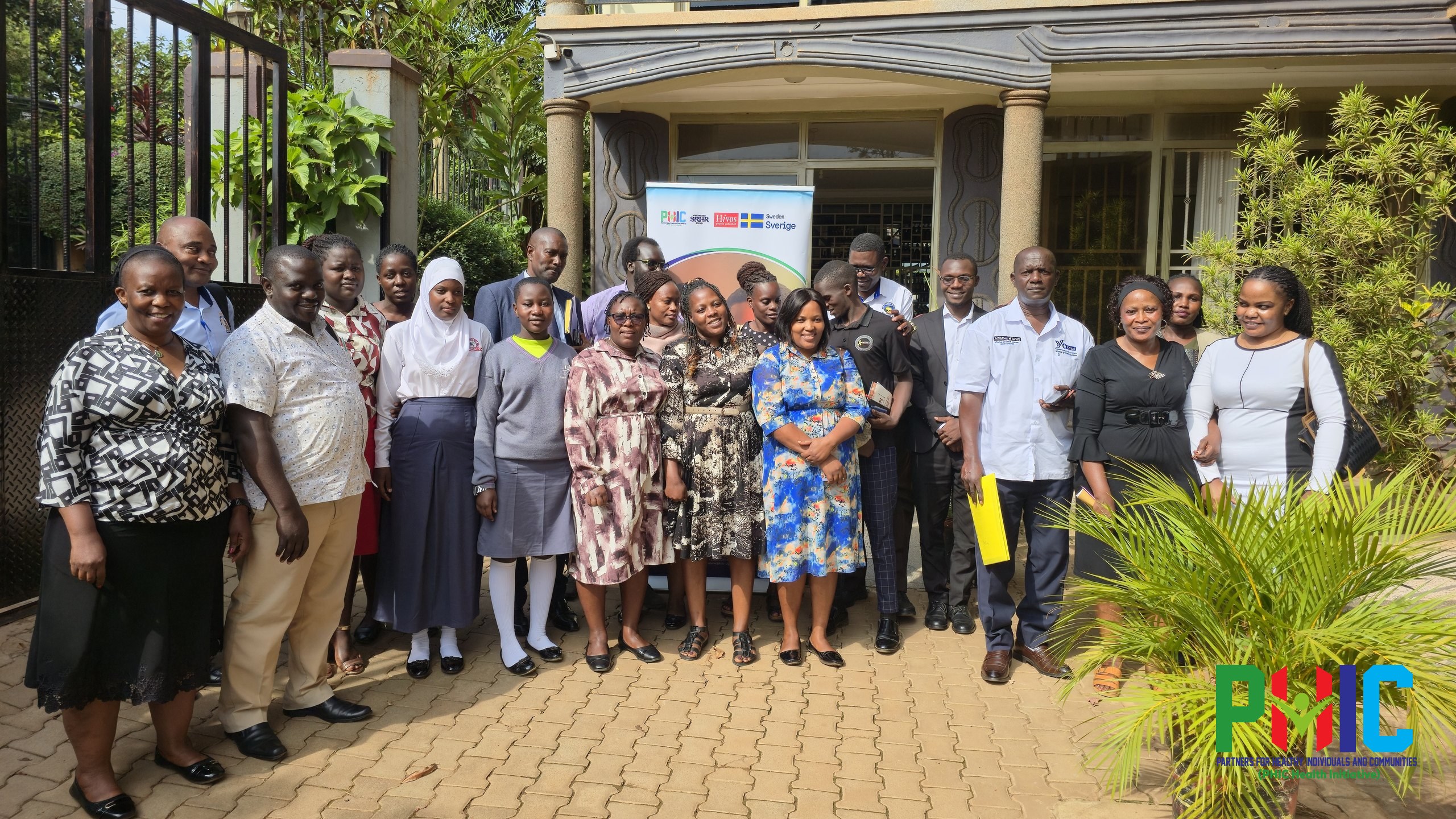
Young people, members of the DHT and DICAH, heads of health facilities and school leaders pose for a group photo after the District Adolescent and Youth SRH and SGBV dialogue in Wakiso.
The numbers explain the urgency. Teenage pregnancy stands at 25% in Wakiso (UBOS 2023). Nationally, 34% of girls are married before they turn 18 (UDHS 2022), and young people account for 34% of new HIV infections (UNAIDS 2023). Stigma and provider bias still limit how far adolescents use contraception, post-abortion care and services for survivors of sexual and gender-based violence (SGBV).
PHIC, together with the Uganda Ministry of Health and the DHT, carried out support supervision and onsite mentorship in 20 health centres in Wakiso, starting in April, with follow-up visits in October 2026. The dialogue provided a platform to discuss what those visits found beside the experience of the young people the facilities are meant to serve.
The aim was a conversation where young people in and out of school took part directly, including on a panel, and told district decision-makers what affects them and their recommendations. Three concerns stood out:
- Confidentiality. Fear that private matters will not stay private keeps young people away from services.
- Gender dynamics. Girls and boys do not face the same barriers when they seek information and care.
- Returning to school. Girls who have dropped out face hurdles getting back into the classroom.
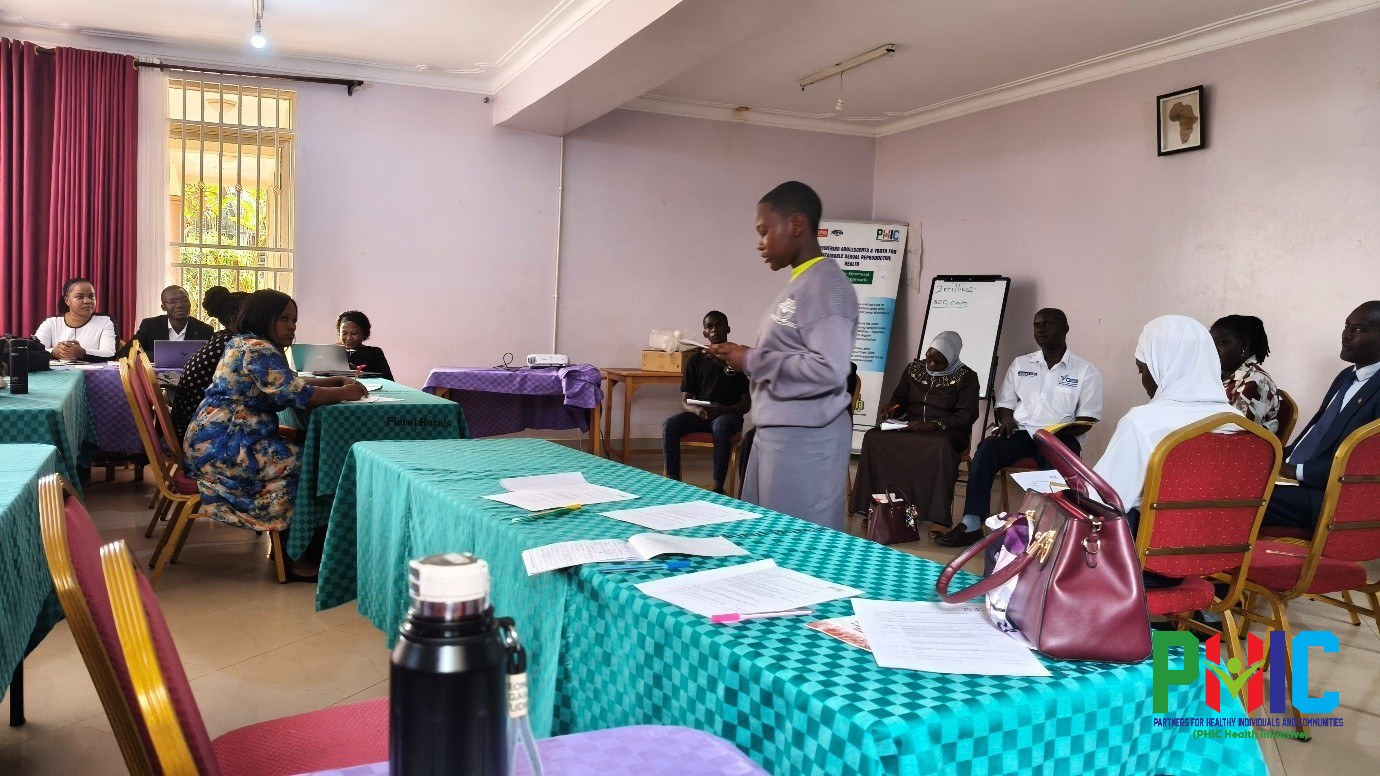
An adolescent makes her submission at the panel during the dialogue.
Teachers, health workers, school heads and DICAH members then worked with the young people on what should change, and who should do it.
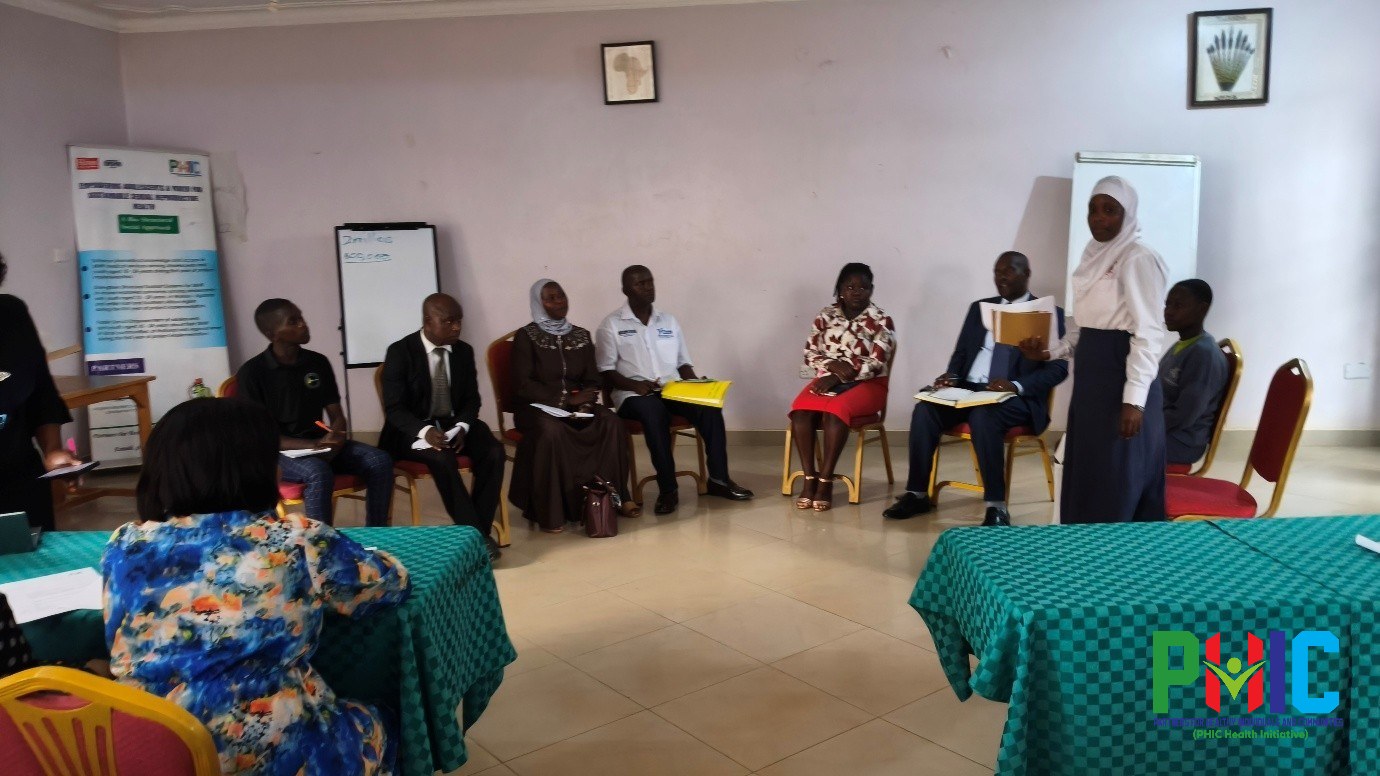
Participants listen as a young person from a school health club addresses the dialogue.
The dialogue produced a 15-point Recommendation and Action Plan, which will be followed through the District Inter-Sectoral Committee on Adolescent Health (DICAH) framework. The DHT, DICAH, the District Community Development Office, health facility in-charges, school administrations and youth leaders made commitments. Three of them stand out:
- Active youth representation on public Health Unit Management Committees (HUMCs).
- Upholding formal youth representation within the DICAH structure.
- Strengthening mechanisms where confidentiality on health issues like adolescent SRH is maintained in schools, to ensure young people feel safe to open up and share confidently.
These put young people where decisions about their health are made, instead of leaving them to be consulted after the fact.
Commitments only matter if they are followed up. PHIC will keep working with the DHT and DICAH, and progress on the action plan will be reviewed at the next quarterly stakeholder meeting.
Thank you to the Wakiso District Health Team, DICAH, the school leaders, the health workers and, above all, the young people who spoke up.